
Another AVA
/Geography is one of the things that makes wine interesting. A plot of land comes along with its own geologic history, climate, altitude, and more. The US Alcohol and Tobacco Tax and Trade Bureau has established 280 American Viticultural Areas, or AVAs, each the result of considerable effort by petitioners who know there is something special about their place. There are 23 AVAs in Oregon and, across the Columbia River, Washington has 22 more. I was asked to write about the newest one of these - the Columbia Hills AVA.
This appeared in the October 2026 issue of Oregon Wine Press.
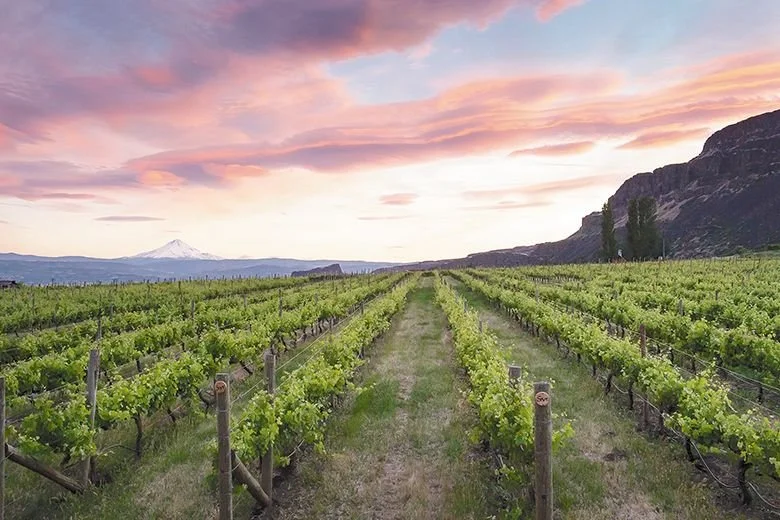
Photo: Andrea Johnson
Wine lovers pouring a glass from south-central Washington will soon see a new name on the label. Federal regulators have christened Columbia Hills as an official American Viticultural Area, recognizing a distinctive stretch of land along the Columbia River.
The Alcohol and Tobacco Tax and Trade Bureau finalized the designation Aug. 17, making Columbia Hills the 22nd addition to Washington's roster of wine appellations. The new region covers 29,387 acres bridging two existing AVAs: Columbia Gorge to the west and The Burn of Columbia Valley to the east.
Etched Into the Landscape
The Federal Register states that AVA designations allow vintners to "describe more accurately the origin of their wines to consumers" and help buyers identify wines they want to purchase. Kevin Pogue, a professor of geology at Whitman College and author of the petition for the new AVA, affirms that producers can now say "my wines are the way they are because they come from this place, and this place has these unique characteristics."
The story of Columbia Hills traces back to the Missoula Floods, the cataclysmic Ice Age deluges that repeatedly scoured the Pacific Northwest and left their mark on soil profiles across the region. Columbia Hills owes its northern boundary directly to that history: the 1,050-foot elevation line marking that edge is the high-water mark reached by the floods here. Below that line, the floodwaters stripped away topsoil. Over the ensuing millennia, a thin cover of wind-blown silt and sand settled atop the exposed basalt.
These shallow, coarse soils spur vine roots to push deep into the underlying basalt bedrock, an uncommon trait in the broader region. The loose texture also drains quickly, a characteristic winegrowers often favor for reining in vine vigor and concentrating fruit.
The floods left more than soil behind. They also cut the slopes into stepped terraces, terrain now prized for vineyard sites. Every acre of the new AVA faces south, receiving consistent sun exposure throughout the growing season.
By the River's Edge
The Columbia Hills appellation shares its name with a 35-mile ridge running above the river, a natural area preserve and a historical state park. Much of the AVA sits within a mile of the water, close enough that the river tempers the climate, warming early mornings during the growing season and stretching the window growers have to ripen fruit.
Elevations range from 74 feet to that 1,050-foot ceiling, another factor that makes the region's growing conditions distinct from those of higher-elevation neighbors.
Put a Label on It
Vines in the new AVA presently cover only 300 acres, tended by a few vintners. At fewer than 30,000 total acres, the appellation is on the small side. But small is beautiful, according to Pogue, who has authored 11 AVA petitions. "I've tried to lean toward an ideal, where the physical characteristics within the boundaries are very uniform and have the potential, at least, to affect the sensory components of the resulting wine," he said, drawing a contrast with large AVAs that encompass widely differing conditions. "To me, it's really cool knowing about the geography of where my wine's coming from and why it might be the way it is."
Beginning Sept. 16, wineries sourcing fruit from within the boundary may apply to the TTB to approve labels citing "Columbia Hills AVA" as the appellation of origin, giving them a new tool to distinguish their Cabernet Sauvignons from those grown elsewhere.
The AVA designation gives the region a name and legal identity, but its character on the palate is still taking shape, vintage by vintage. For wine lovers, that makes Columbia Hills worth watching: an appellation still early in its story, where this year’s harvest could help define what "Columbia Hills" comes to mean in the glass.


