

Palette and Palate
/Is a bottle of wine a work of art? Or is it the product of skill and craftsmanship? Maybe it's just a beverage?
And what is a work of art, anyway?
These questions and more are on the menu at the Portland Art Museum's monthly Maker's Table series, now underway and continuing through September.
Pairs of Oregon winemakers and visual artists come together for evenings of conversation moderated by Julia Dolan, PAM's interim chief curator and Minor White Senior Curator of Photography.
The Thursday evenings begin with a 6 p.m. walk-around tasting of featured wines alongside the work of that month's artist. A conversation between the winemaker and artist follows, exploring the creative processes behind both disciplines. The evening concludes with an optional three-course plated dinner with curated wine pairings and menus showcasing the artistry of several local chefs.
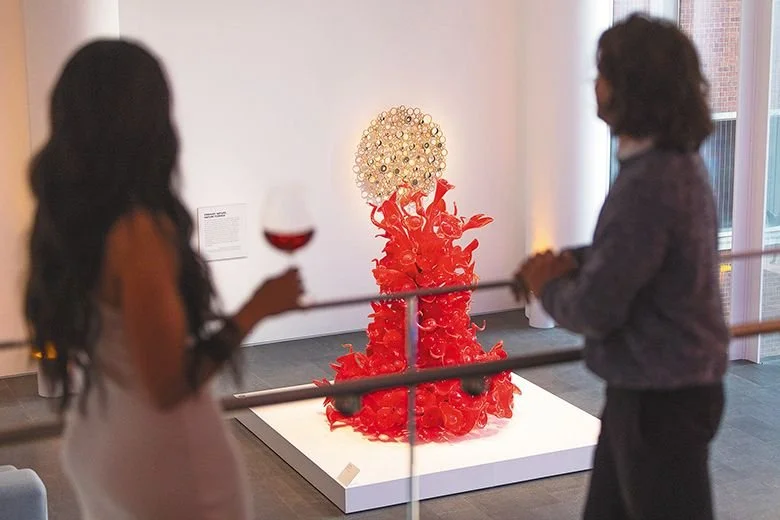
Photo: kitta bodmer
A CULTURAL COMMONS
The series seeks to further activate the museum's Rothko Pavilion, still in its first year of use. One of Oregon's most significant capital investments in the arts, the light-filled glass Pavilion adds 22,000 square feet to the campus, linking its two legacy buildings and creating a "cultural commons" in the city center. It bears the name of famed Latvian-born painter Mark Rothko (1923-1970), who spent his youth in Portland and found his way to PAM for his first art classes and solo exhibition.
"We've got this beautiful renovated space to introduce the museum to people who might not have interacted with us before," Dolan said.
The Maker's Table series convenes on the Pavilion's ground floor and invites dinner guests to the third floor overlooking the Grand Gallery, the first public dining use of the space.
Moving food and wine through galleries filled with art is not a task the museum takes lightly. "We've had multiple meetings including our artwork conservators and other members of the collections team, because we want to make sure that everybody's comfortable in understanding that we are respectful of our guests, and we're also respectful of the objects that we care for," Dolan said.
"This is a bit of a test and experiment to see how we can use a space that's really in the heart of the museum," said Dyana Soul, head of sales and experiences for the museum and the organizing force behind the series. Soul recently joined the PAM staff after years of working in national marketing and event planning for Willamette Valley wineries.
"I was having a conversation—my very first week here—with our interim director, Donald Urquhart, and he was talking about wanting to pull in makers and creators and artisans of the region," she recalled.
That institutional openness, alongside her twin passions for art and wine, inspired the Maker's Table series.
ART AND CRAFT
Wine and art often speak the same language. Both can become mass-produced products marketed for broad appeal. Yet the finest wines and most compelling works of art emerge from deliberate craftsmanship and personal vision. A glass of wine or a striking painting can engage the senses, stir emotion and reward thoughtful attention.
"I think the best winemakers are artists," affirmed Soul. "It's not just science, it's not just farming, it's also intuition and interpretation of a vintage and of the vineyard, and that's what separates the good wine from the great wine. This felt like such a natural pairing."
"I think about what constitutes 'art,' and I prefer to have an expansive understanding of that," added Dolan, whose curatorial career included roles at the Philadelphia Museum of Art, the Addison Gallery of American Art and the Fogg Art Museum at Harvard before coming to Portland 16 years ago.
She suggests that a thoughtful approach to daily life can reveal beauty. "I'd much rather people think critically about what they're seeing and think in a healthy way about what they're receiving in terms of information through art or how they're experiencing a wine or a meal or the clothing that we put on our bodies. If we can expand the art circle and embrace folks who think of what they do as artistic, I'm all for it."
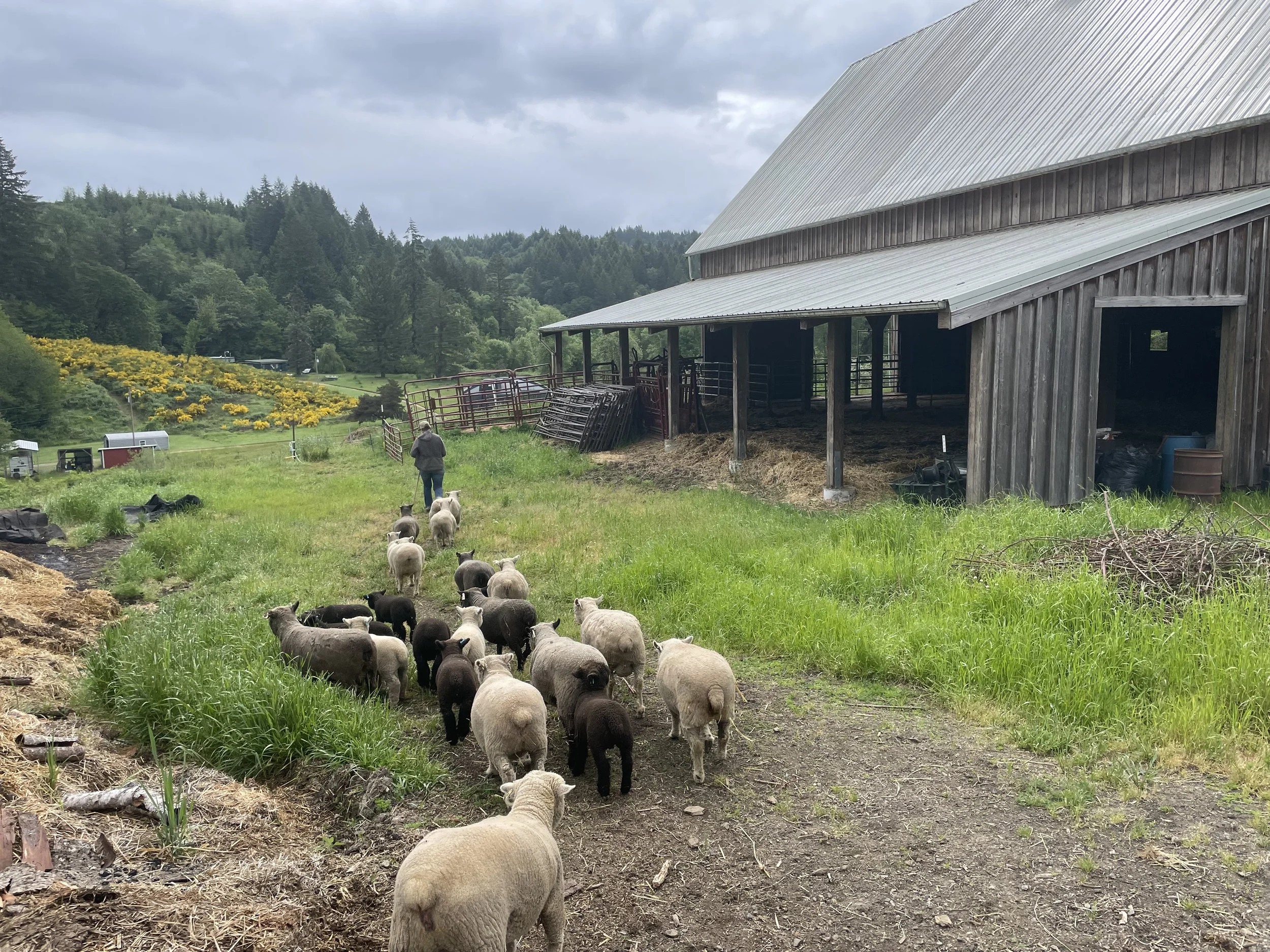
clare carver leading her sheep at big table farm
REALIZING A VISION
Painter Claire Carver and her spouse, winemaker Brian Marcy, came to Oregon from Napa two decades ago. On 70 acres near Gaston, they have built an organic farm where they live alongside sheep, goats, chickens, horses and cattle while painting pictures and making wine for the Big Table Farm label. The pair appeared together at the Maker's Table in June.
"When I'm doing a painting, I see it as an analogous thing to when [Brian's] making wine," Carver told me in a pre-event interview. "You have a point of departure, you have something that you see, that stirs your desire, your passion, your creativity as an artist. And then, from there, you kind of run with it."
Reflecting on the boundary between craft and art, she observed that "when you make things over and over, with time, it becomes a craft. When you add inspiration, your own soul and your humanity to that craft, it becomes art."
Both winemaking and painting begin with mastery of technique and craft. Only then can a vision be realized.
Marcy explained, "When you hone that craft, and you have the expectation of what you want it to look or taste like, you will be much more able to execute the final product that you have created in your mind. The art aspect is the vision that's in your mind. And if you don't have the craft, you can't get there."
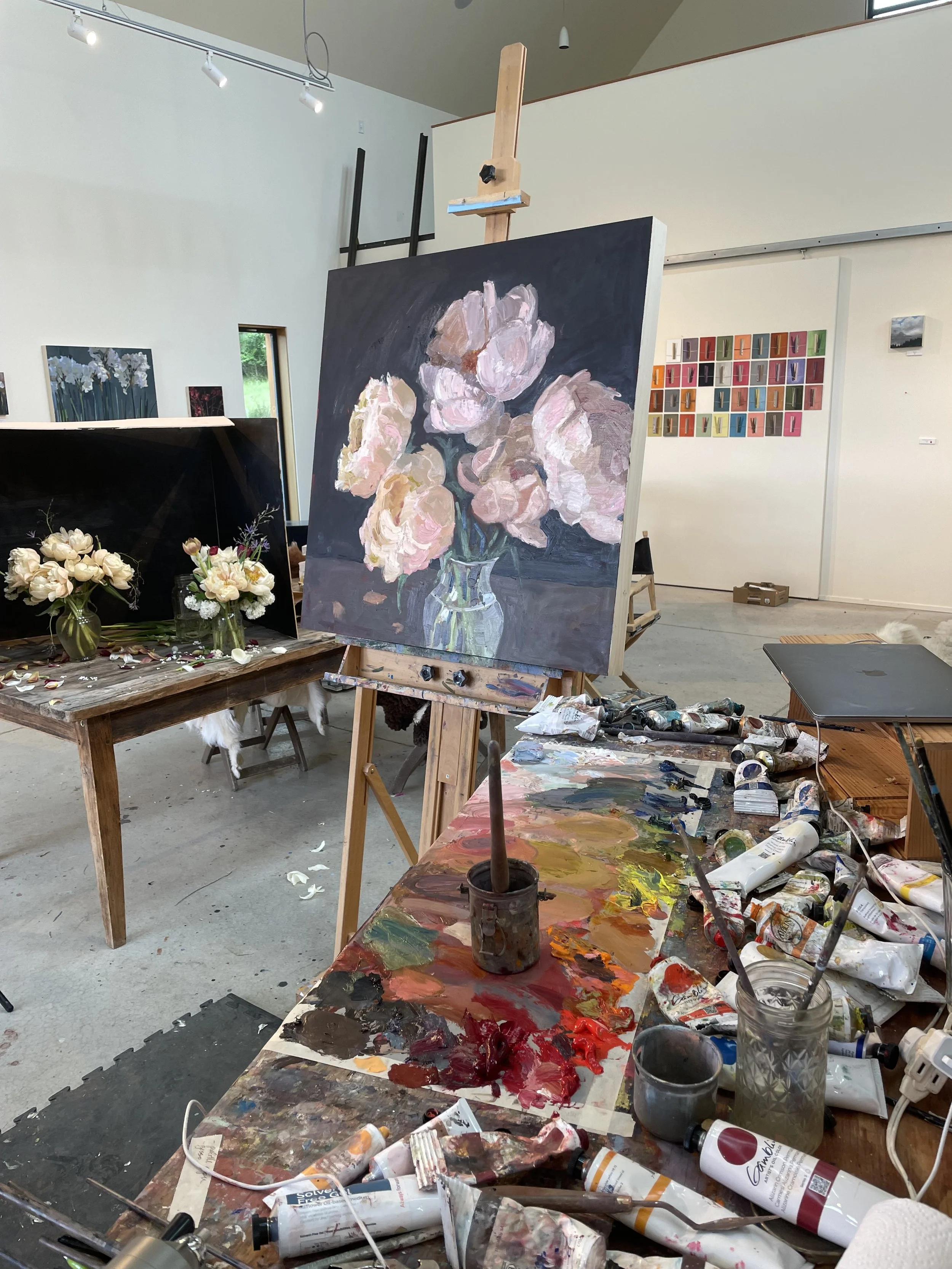
clare’s studio AT THE FARM
COMING TOGETHER
Painter Hazel Schlesinger was paired with Alexana Winery's Tresider Burns for the first event of the series in May. Dolan and Soul collaborated closely with participants to create duos with a strong affinity. Burns and Schlesinger both grew up on the Oregon coast, but a shared interest in color sparked their collaboration for the series.
"Hazel is really focused on color, and sources color from a lot of different places. She has a [paint] color that she uses that is sourced from the soil in France," Burns shared, noting that his graduate research in Oregon State University's Fermentation Sciences Program focused on color stability in Pinot Noir. The variety's thin skin can challenge winemakers seeking depth of color in the glass.
"Hazel seemed very fascinated by the idea that we can control the color of our wines with how we're farming," he noted, going on to mention leaf pulling in the vineyard and various cellar techniques that can influence wine color.
"We typically think of winemaking as: how do we control the aroma and the mouth feel of a wine? But really, we can do a lot to control the color of the wine, too. That sort of helps you enjoy it with your eyes."
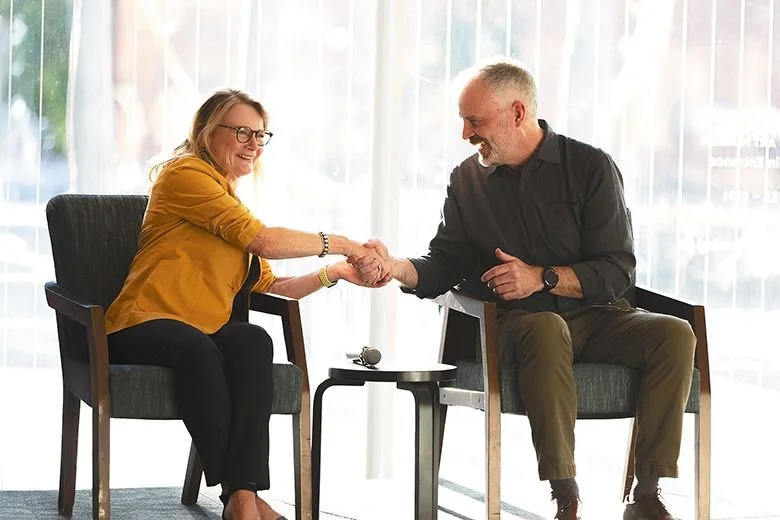
Hazel schlesinger and Tresider burns [photo: Kitta bodner]
Burns is eager to occupy common artistic ground with Schlesinger. "You create something that speaks to you, and you hope it speaks to other people," he said. "I think that works with wine and with painting. Hazel's using her exploration of color to create paintings she hopes people will like. I'm trying to create compelling ferments that represent this place where we're growing Pinot Noir, and I hope other people like them."
GAINING APPRECIATION
Both wine and art face accessibility barriers. Fear of not understanding "the rules" in either discipline intimidates many people. Those are precisely the hesitations the Maker's Table series hopes to dispel.
"How to encourage people to explore: that's the challenge," affirmed Marcy.
Soul's vision for the series draws on her deep care for both the art and wine communities. She hopes the program encourages exploration by introducing wine lovers to art and art lovers to wine.
Dolan looks forward to learning more about wine as she moderates the presentations. "I don't know tons and tons about it," she said, "so I'm learning something new inside the museum, and I'm also learning something new from my palate."
"In the past, museums and art galleries have not felt warm and inviting," she continued, citing the use of insider terms and the assumption of previous knowledge. "I don't want folks to feel that way. I want them to know their questions are important, and it's okay to not know everything. I'm okay being a little uncomfortable myself with not knowing about wine, and saying it. But I still love it, and I'm excited to partake."
The Maker’s Table series invites guests to bring openness and curiosity to the intersection of wine and art. As artists, winemakers and the rest of us gather, a new kind of cultural conversation can emerge—rooted in craftsmanship, creativity and shared discovery.


