

Revino... refilled!
/One of the “beats” that I follow for Oregon Wine Press is sustainability. And telling the story of Revino has led me from interviews with the founders when this was just a dream, to a local bottling line, to a German-made bottle washer, to, at last, encountering the refillable bottles in the wild. Previous articles Revino are HERE and HERE This article may be found on the OWP Website with the title “Hiding in Plain Sight.”
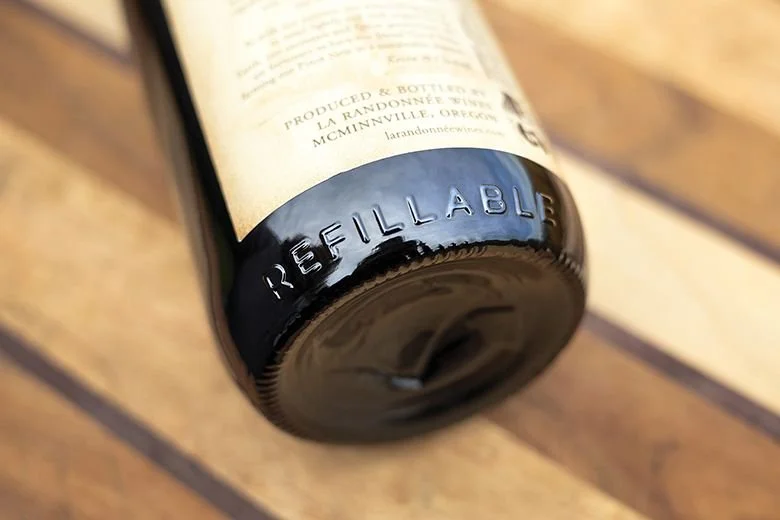
Revino bottle - Photo: Rachel Thompson
Revino, the Portland-based pioneer of returnable, reusable wine bottles, has joined the global community of Certified B Corporations, affirming its mission to make sustainability as important as profitability.
The company’s mission addresses one of the wine industry’s biggest environmental challenges: glass packaging. By offering wineries an alternative to single-use bottles, Revino helps lower carbon emissions and reduce waste, all while maintaining the premium experience wine lovers expect.
Since its founding two years ago, Revino has sold over a million bottles and partnered with over 100 wineries across Oregon, with new return sites and collaborations continually launching.
BE ON THE LOOKOUT
While the infrastructure grows, the success of reuse depends on participation. Revino encourages wine shoppers to look for the distinctive leaf-inspired motif on the bottle’s neck and “refillable” stamped on the heel. The shallow punt (bottom) saves unnecessary weight. It sports a design with circling arrows that highlight the circular nature of reuse systems (older bottles are embossed with an outline of the state of Oregon on the punt).
Labels on Revino bottles provide other visual cues. All are now required to include clear instructions or a QR code directing consumers to information on returns and reuse. Revino’s website includes resources and links to nearby return and recycling locations.
Choosing these bottles and ensuring they make it back into the system gives all of us a direct role in supporting a more sustainable wine industry.
OREGON AND BEYOND
The company is now broadening its reach to include partners in Washington and California. “The wine industry is not only local,” said Adam Rack, co-founder with Keenan O’Hern. “We ship our products pretty far, and there's a lot of overlap with other markets that want this.”
Their California pilot program includes partnerships with prominent brands, such as Silver Oak, in Napa Valley. This initiative addresses a significant challenge for large wineries: maintaining brand identity while participating in reuse systems.
Many large wineries depend on proprietary bottle molds that are key to their brand identity. The pilot program shows that wineries can preserve their unique image by reusing their specially crafted bottles, while meeting consumer demand for sustainable packaging.
This small-scale tasting room collection and washing program aims to prove commercial viability while gathering data on consumer feedback, messaging and staff engagement. Going forward, these insights may prove useful to the whole industry.
Meanwhile, the company is expanding its list of available bottles. Until now, Revino’s signature design has been its Antique Green Burgundy Cork bottle. The company recently introduced two additional options: a Flint (clear) Burgundy Cork available for year-end delivery, and an Antique Green Burgundy Stelvin (screw cap) that’s available immediately. A Bordeaux mold is planned for late 2026.
NEW PARTNERSHIPS
As Revino’s state-of-the-art washing facility comes online in 2026, the company will seek to serve producers of beer, kombucha and other beverages alongside its expanding roster of winery partners. The facility will be capable of washing, sanitizing and inspecting up to 40,000 bottles per day.
To scale up distribution and retrieval, Revino has partnered with packaging leaders Saxco and Pioneer. By leveraging these established logistics networks, Revino can expand its reach without building its own warehouses and fleet, ensuring bottles are collected, washed and returned to wineries more efficiently.
The washing process involves removing a label that may have been securely attached. The company is collaborating with label manufacturers to develop washable adhesives, which are expected to undergo industry testing in early 2026. These innovations aim to make bottle reuse seamless on a large scale.
FINANCIAL ENCOURAGEMENT
Revino’s ambitious plans recently received a major boost. In September, the company secured a $250,000 investment from Business Oregon’s Strategic Reserve Fund to help launch its Portland-area washing facility.
The move comes as Oregon’s wine industry, which generates $8 billion annually and employs nearly 40,000 people, grapples with shortages in its glass supply chain.
“Glass manufacturers are shutting down,” observes Rack. “If we aren’t reusing the bottles we have here, and factories are shutting down, the only option is to buy them from somewhere else,” like overseas. Building a local circular economy for bottles reduces that strain and clears a greener path forward.
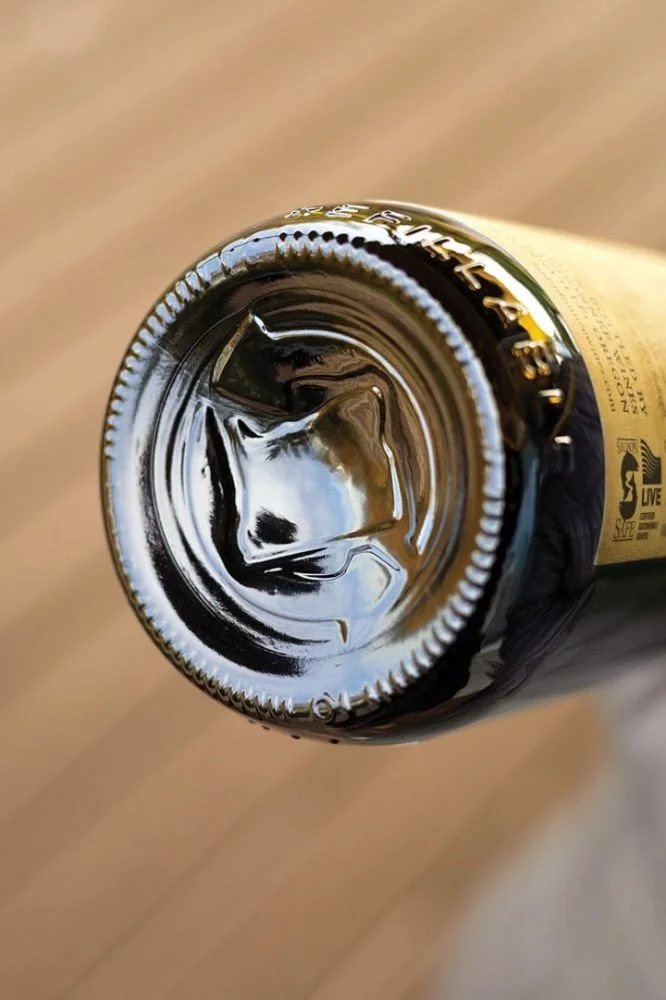
Photo: Rachel ThompSON
Revino continues to blend innovation with practicality, proving that sustainable packaging can scale without sacrificing quality or identity. For consumers, each returned bottle is more than a small act of recycling — it’s a tangible way to support wineries, strengthen local economies and help shape a sustainable future for wine.


